Sallyanne Flemons, North East Family Arts Ambassador, shares insights and thinking from experts in Poverty Proofing©, ways to support low income families.
The culture sector is in a uniquely powerful position to help families at this time of crisis both in the creativity of its approach and the potential we have to make a real difference.
Back in the autumn 2023 at the North East Family Arts Network Conference, Chloe Maclellan and Derri Burdon shared insights on poverty in the UK and the significant impact creativity can have on children’s development.
Chloe Maclellan, Poverty Proofing© Team Manager at Children North East, shared…
The harsh reality:
- There were 4.2 million children living in poverty in the UK in 2021-22. That’s 29 per cent of children, or nine in a classroom of 30.1
The potential influence of cultural organisations:
- Creating services and experiences inclusive of those living in poverty often presents a significant challenge for cultural organisations. In contrast, access to culture can increase social inclusion, giving cultural organisations a powerful role to play in the wider solutions to poverty in their communities.
The importance of providing safe, non-discriminatory activities:
- The Poverty Proofing© process offered by Children North East is built around the principle that ‘No activity… should identify, exclude, treat differently or make assumptions about those whose household income or resources are lower than others.’
There were 4.2 million children living in poverty in the UK in 2021-22. That’s 29 per cent of children, or nine in a classroom of 30.
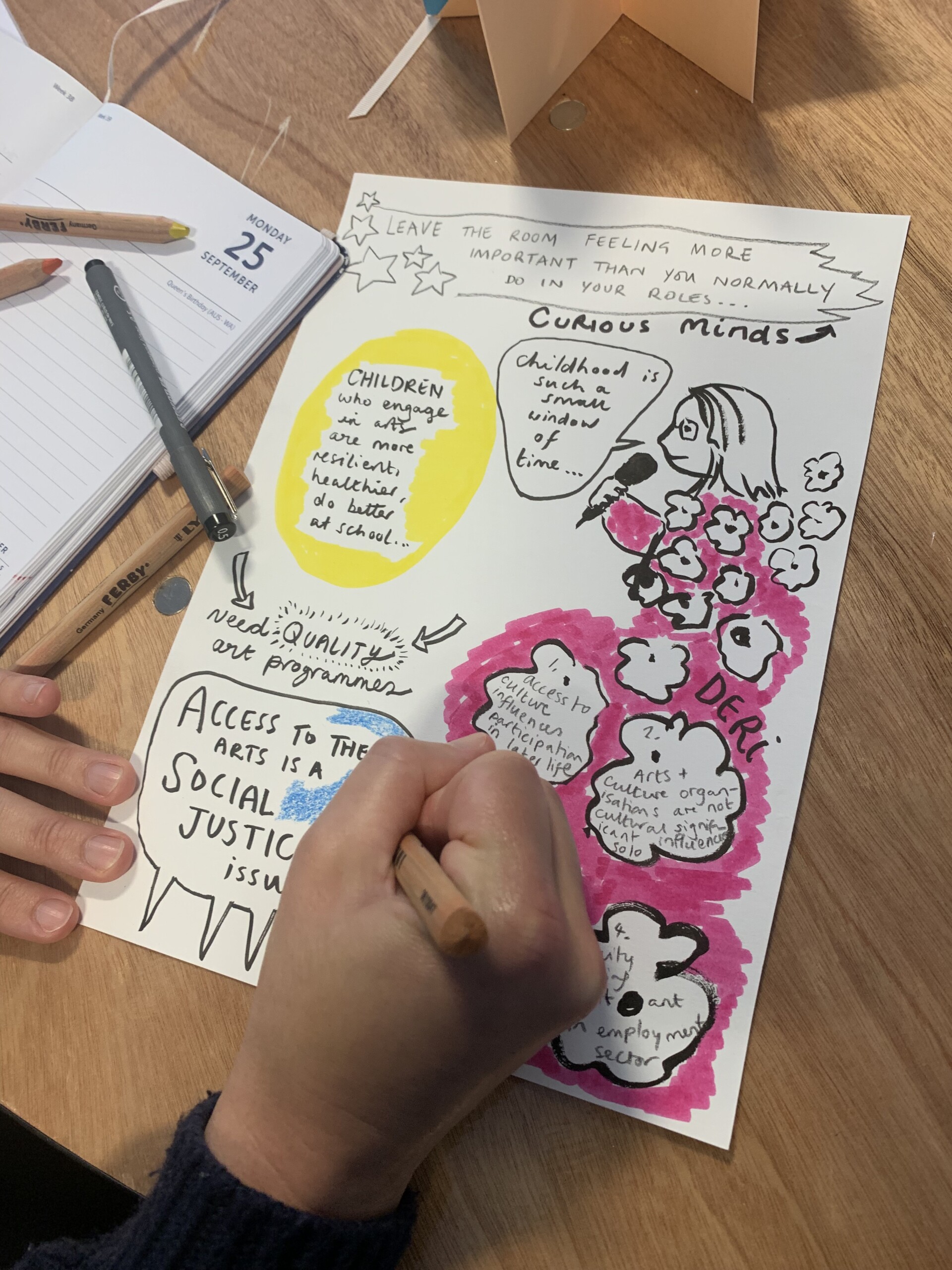
Derri Burdon, Chief Executive of Curious Minds & Cultural Learning Alliance Co-Chair shared…
A few reasons why encountering culture as a family matters, especially during a cost of living crisis:
- Experiencing culture in the context of a family is hugely important – this maintains dominant influence across all ages. (See the research)
- Access to culture in early years influences participation later in life.
- Employers require creativity in jobs that are particularly likely to grow in importance in the future workforce.
- People who take part in the arts are 38% more likely to report good health.
- Students from low-income families who take part in arts activities at school are three times more likely to get a degree.
The Conference setting provided an opportunity for multiple cultural organisations to come together, absorb these insights from Chloe and Derri and consider some key questions.
These questions – outlined below – helped us to unravel how we could collaborate to really make a difference to families during the cost of living crisis:
- Listening deeply – How could we ensure we are responding to the wants and needs of these families and embed it into our practice?
- A celebration – How can we learn from one another and share examples of what we are already doing to help families facing cost of living challenges?
- The wish list – What would we do to help tackle this problem if we had limitless resources? What can we take from these aspirations and make into reality?
- Better together – How can we collaborate to raise funds for projects that will help families with cost of living challenges. What are the benefits of doing this together?
These prompts can be used as a handy starting point for any cultural partnerships discussing this problem.
Thanks to artist Deborah Bower at The Foundation Press, we can present the fruits of our conversations through a wonderful Meeting The Need Zine.
There are nuggets from both Chloe Maclellan and Derri Burdon at the front of the Zine followed by some of the thoughts, aspirations and action points – that grew out of the inspiration they gave, on pages 8-10.
Better still, if you would like to raise money to meet the needs of families during the cost of living crisis, read this blog inspired by the day written by fundraising consultant and conference speaker, Helen Jenkins.